
Federal Access Center
Leveraging historic federal investment to accelerate coal community economic transition
The JTF’s Federal Access Center helped local partners develop competitive projects to unlock major public resources for sustainable economic growth.
Background
Under the Biden Administration, Congress allocated hundreds of billions of dollars for energy communities, thanks in part to recommendations made in our National Economic Transition (NET) platform.
Despite the historic amount of funding available, these communities faced significant barriers to accessing it to support their projects.
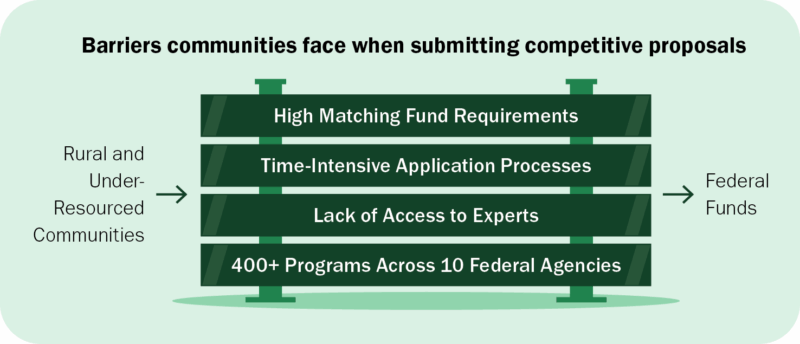
In 2021, we saw an opportunity to help hard hit coal communities access this historic federal investment as a critical first step in growing and diversifying their economies, and opened our Federal Access Center.
Federal Access Center Impact
Building on our early work helping communities access POWER grants, and our NET platform, we opened our Federal Access Center (FAC) to help drive the available federal funding into coal communities to advance economic diversification, workforce development, and infrastructure projects.

$2.8 Billion Leveraged
We helped communities leverage a total of $2.8B to move local economic development projects forward to create jobs, train workers, connect households to the internet, and support entrepreneurs and small businesses

56X ROI
The FAC offered a 56X return on investment for our philanthropic partners

234 Federal Applications Supported
We proudly supported 234 federal applications for investment across every coal-impacted state
Support Through Our Federal Access Center
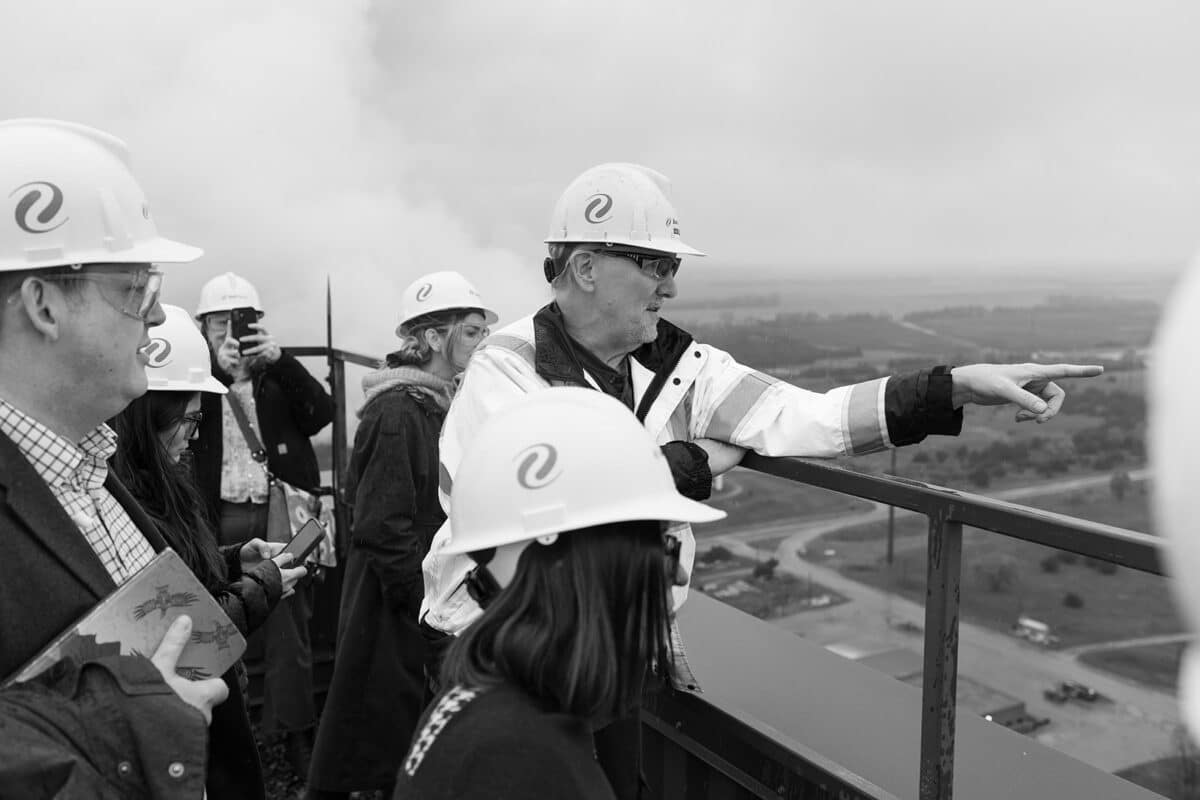
Through flexible grants and tailored assistance, we helped both ready-to-apply and those still in early planning build the momentum needed to compete for significant investment.
From 2021-2025, we offered these services through our FAC, a centralized resource center to help communities overcome barriers to accessing and securing the federal investment needed for local economic solutions. We also gathered data and feedback and made recommendations to federal agencies about how to make federal investment more accessible to disadvantaged energy communities.
While our FAC is not currently a standalone initiative, building directly on our previous successes, in 2026, we launched our Local Economy Lab to continue to help coal communities leverage public investment to seed, grow, and scale transformative economic projects. We support our grantees in the Local Economy Lab apply for available federal funding.
Spotlight on Federal Access Center Wins
With our support, local and Tribal governments, community organizations, and NGOs were more prepared to apply for and secure funding. Our FAC successes prove that when communities have the right support, they can successfully compete for and manage significant federal investment to transform their economies and build a bright future for residents.
The Appalachian Community Transformation (ACT Now) Coalition (WV) secured a $63M Build Back Better Regional Challenge grant to transform former coalfields into a hub of green innovation, creating thousands of new jobs in the solar industry, expanding technology businesses, upgrading buildings to be more energy efficient, and converting abandoned mine lands and former industrial spaces for 21st century manufacturing.
Shaping Our Appalachian Region (SOAR) won $40M from the Economic Development Administration’s Distressed Area Recompete Pilot Program. SOAR (eastern KY) won $40M – the largest single award – to connect prime-age residents to resources and training for good jobs.
Wind River Development Fund won $36M from the Economic Development Administration’s Distressed Area Recompete Pilot Program. The Wind River Development Fund (Wind River Indian Reservation, WY) received $36M to catalyze an Indigenous-led eco-tourism economy.
Generation West Virginia leveraged a combined $45M to successfully connect more than 32,000 households to reliable internet across the state, which ranks last in broadband access. This funding is transformational to the local economy, contributing an estimated $720M across 15 previously disconnected counties.
North Carolina Textile Innovation and Sustainability Engine, led by Industrial Commons, was awarded $15M through the National Science Foundation’s Regional Innovation Engines program. The project will create and retain nearly 2,000 textile jobs across North Carolina, South Carolina, and Tennessee, build the region’s capacity for environmentally sustainable textiles, reduce carbon outputs and the number of textiles in landfills, and develop new product lines within the expanding workforce.
Great Lakes Water Innovation Engine, led by Current Innovation, won $15M through the National Science Foundation’s Regional Innovation Engines program. The project will develop a “circular blue economy” by deploying innovative technologies that will create workforce opportunities and maintain environmental health.
Appalachian Wildlife Foundation and the Cumberland Trails Conference (KY, TN) received nearly $10M from the Appalachian Regional Commission’s ARISE initiative. This funding will support Boone’s Ridge, an outdoor recreation tourist destination on former mine land in Kentucky and Tennessee.
Hopi Utilities Corporation (AZ) was awarded over $9M through the Department of Energy’s Energy Improvements in Rural or Remote Areas program. Hopi Utilities Corporation will deploy a hybrid microgrid to power IT, waste management, and other services.
Native Renewables (AZ) was awarded $8M through the Department of Energy’s Energy Improvements in Rural or Remote Areas program. Native Renewables will install off-grid solar and battery storage systems to electrify Hopi and Navajo homes while training and employing an Indigenous workforce.
Continuing Federal Support for Coal Communities
We know federal investment plays a key role in advancing locally led economic development projects, providing the scale of funding often needed to move projects from planning to implementation. In 2026, we launched our Local Economy Lab to help coal communities seed, grow, and scale transformative economic projects by accessing available public resources and private sector partnerships and support our grantees with applying for available federal funding. Contact our team to learn more about our grants and securing public investments.